

Intro to Heresies
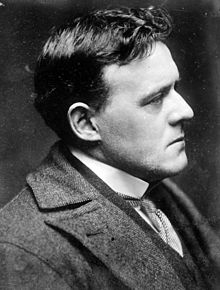
Hilarie Belloc identifies five major heresies in our history: the Arian, the Mohammed, the Albigensian, the Protestant, and the Modern. He defines heresy as “the dislocation of some complete and self-supporting scheme by the introduction of a novel denial of some essential part therein.” The Church is that complete and self-supporting scheme in which this discussion is framed. Each of these heresies, as with all heresies, introduces a denial of some essential part of the Church.
Arianism was the denial of the divinity of Christ. Mohammedism was, and still is an overly simplified version of Christian doctrine and denies our Lord as nothing more than a prophet. Albigensianism tried to rationalize the problem of evil and ended up denying the omnipotent goodness of the Creator. Protestantism destroyed the unity of the bride of Christ and denied her authority. And the Modern heresy is the denial of truth and certainty.
Heresy is a serious problem. We all need to be united as one in our Lord. In the first letter to the Corinthians Paul says, “Now I beseech you, brethren, by the name of our Lord Jesus Christ, that you all speak the same thing, and that there be no schisms among you; but that you be perfect in the same mind, and in the same judgment.” (1 Corinthians 1:10)
Heresy seeks to interrupt the unity of mind and of same judgment. This is the tactic and goal of the enemy; to confuse; to disorder; to lead astray. The enemy uses our human weakness to cause chaos and anarchy leading us away from the truth and ultimately to our own damnation.
This is why our ancestors took heresy so seriously. This is why they fought and died to uphold the truth and the unity of the Church. As our Lord said, “And fear ye not them that kill the body, but are not able to kill the soul: but rather fear him who is able to destroy both soul and body in hell.” (Matthew 10:28) My brothers and sisters in Christ, heresies still affect us to this day, and our bodies and souls are in mortal jeopardy.
Heresy plays on our pride and arrogance. We think that we know better than our superiors, our ancestors, our Church, and ultimately God himself. We put our faith in this world and not the next; in the next technology or material item; in the government or some other man made institution; in the newest philosophies or most modern ways of thinking.
As Catholics we are called to defend the truth and our One Holy Apostolic Church, which Jesus Himself instituted and which has continued to be guided by the Holy Spirit. This means that we are not allowed to dissent on Church teachings. This is why we as Catholics can never support intrinsic evils: abortion, euthanasia, embryonic stem cell research, human cloning, nor same-sex marriage.
Let us unite ourselves under one banner, the King of King, our Lord and Savior, who died for us. Let us serve His Church. Let us be one.
Viva Cristo Rey!
Early Persecutions
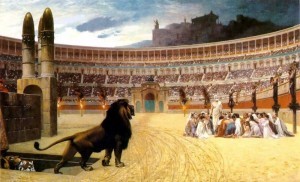
In A.D. 64 more than half of Rome burned to the ground. The Emperor Nero, blaming it on the Christians began the first major persecution of the Church by the State. These persecutions would last, on and off, till 313 A.D. with the Edict of Milan, which finally legalized Christianity.
Three particularly heroic martyrs of the early Church were St. Polycarp, St. Ignatius, and St. Lawrence.
Saint George
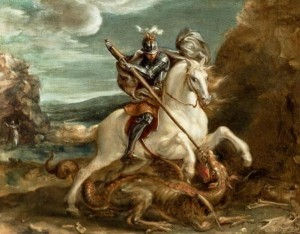 According to legend a terrible dragon had ravaged all the country round the city of Libya, called Selena, making its lair a marshy swamp. Its breath caused pestilence whenever it approached the town, so the people gave the monster two sheep everyday to satisfy its hunger, but, when the sheep failed, a human victim was necessary and lots were drawn to determine the victim.
Welcome
History is the study and knowledge of past people, places, and events. It helps us define who we are as individuals so that we may know where we are going as a society. Like the ship adrift among the waves, we must know which port we have come from so that we may know where we are going. Finding that guiding light will always guide us home giving an individual and a society purpose and direction.
This site seeks to educate, inspire, and enrich its readers through the stories and histories of those who came before us. “Revisionist history” has destroyed our understanding of our ancestors and the past. We have stood on the shoulders of giants dismissing those who came before us, while our ancestors honored those who came before them and surpassed them.
We seek to restore the proper understanding of history and our ancestors, giving us the ability to go boldly into the future. We will humbling try to accomplish this monumental task through the study of history trusting in Him who is The Lord of History.
St. Sir Thomas More
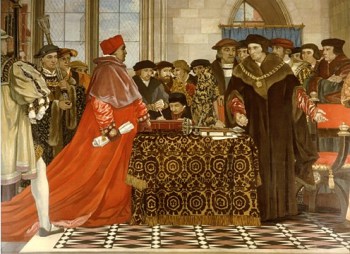
St. Sir Thomas More lived during the reign of King Henry VIII of England and Martin Luther, rebels, whom were major figures of the Protestant Rebellion. More worked tirelessly to halt the spread of Protestantism and was a staunch defender of the Church. In his work A Dialogue Concerning Heresies he asserted that the Catholic Church was the one true Church, whose authority had been established by Christ and the Apostles, and that its traditions and practices were valid.
 The Lord of History