Home » Posts tagged 'History'
Tag Archives: History
The Apostles: Introduction
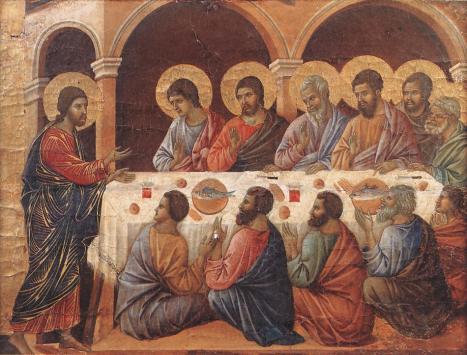
Who were the Apostles and what happened to them? Most people today know who Peter and Paul were, at least culturally if not through the eyes of faith. They may have heard of doubting Thomas or Judas (the one who betrayed Jesus), but what about the other Apostles? Who were they and what happened to them?
This will be the first part of a series on the Apostles of Jesus. For the introduction let’s start by looking at a common misconception that is generally touted against the Apostle nowadays.
There are some, mostly from the self-proclaimed “intelligentsia” who like to claim that the Catholic faith is made up. They say that it really was the ambitions of Paul who took Jesus’ message (if he even existed) and turned him into the god-man we know today. Ultimately it was just a profit making scheme, to make lots of money and exert control over the people or some other non-sense along those lines.
The very real problem with this poorly thought out theory are with the facts themselves. Let’s take a quick look at how each Apostle died:
The Original Twelve:
- Peter was crucified upside down.
- Andrew was crucified on an X shaped cross.
- John died a natural death.
- Philip was crucified by soldiers.
- Bartholomew was flayed and beheaded.
- Thomas was stabbed with a spear.
- Matthew was stabbed with a sword.
- James the Greater was stabbed with a sword.
- James the Lesser was stoned to death.
- Jude Thaddeus was shot with arrows.
- Simon the Zealot was crucified.
- Judas Iscariot committed suicide after betraying Jesus.
The Additional Apostles:
- Matthias was crucified.
- Paul was beheaded in Rome.
As we can clearly see, every single Apostle, with the exception of John died a very violent death. (And even then John faced persecution; being boiled, miraculously escaping, and later being imprisoned.) It would seem logical that these men were in it for more than just wealth and power. What man willingly dies for something he does not believe in? A man may be wrong about his beliefs and he may die for that wrong belief but he does not go willfully nor joyfully to his death as the followers of Christ had done.
They also gave up everything that they had, their livelihoods, their way of lives, everything to follow Jesus. They were sent to the farthest known corners of the Roman Empire and beyond. They went to Rome, Spain, Jerusalem, Egypt, Greece, Syria, and even all the way to Ethiopia and India.
None of them died rich, so if Christianity was some profit making scheme, it is obvious that it did not work out for them. They would have been much better off just being fishermen, instead of fishers of men. The Apostles all died without power or wealth or possessions, and guess what? They were only following their teacher, whom died in the same way.
And here is the kicker: People are still living and dying for this ancient faith. It is the one thing that just never seems to go away. As much as modern man would like to try and destroy the faith, or ignore it, or hate it, He still moves men and women today. Let us pray for those who are still be persecuted for the faith, and for the courage to prevail if we ourselves are put to the test. Let the example of the Apostles be our guide on how to live and die well for the faith.
For the rest of the series we will be exploring each Apostle: who they were, their relations to Jesus and each other, where they were sent to spread the Good News, and where their remains are located today.
St. Patrick
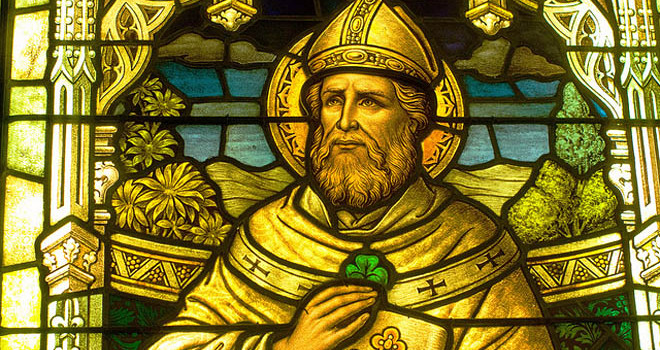
Most people know of St. Patrick through popular culture. He is the patron saint of Ireland and every year there are wild revelries, drunken debaucherous parties, and even the coloring of the Boston River green. But would St. Patrick even recognize or approve of these celebrations? Let’s take a look at this extraordinary saint and find out.
St. Patrick was born in Roman Britain in A.D. 387. He was captured by Irish pirates at the age of sixteen and made a slave for six years in Ireland. During this time he was put in charge of tending sheep, growing closer to God throughout his trials and tribulations. He wrote in his Confessions:
“The love of God, and my fear of him and faith increase, and my spirit was moved so that in a day [I said] from one up to a hundred prayers, and in the night a like number; besides I used to stay out in the forests and on the mountain and I would wake up before daylight to pray in the snow, in icy coldness, in rain, and I used to feel neither ill nor any slothfulness, because, as I now see, the Spirit was burning in me at that time.”
In due course Our Lord appeared to him in a dream and told him that he would be leaving Ireland soon. He escaped by running away to the coast where he was able, after much difficulty, to get a ride on a ship that took him back to Britain. He was eventually reunited with his family, but the story does not end there. A few years after his return Patrick had another vision:
“I saw a man whose name was Victoricus coming as if from Ireland with innumerable letters, and he gave me one of them, and I read the beginning of the letter: The Voice of the Irish’; and as I was reading the beginning of the letter I seemed at that moment to hear the voice of those who were beside the forest of Foclut which is near the western sea, and they were crying as if with one voice: We beg you, holy youth, that you shall come and shall walk again among us.’ And I was stung intensely in my heart so that I could read no more, and thus I awoke.”
This impelled him to join the priesthood where he would eventually rise to become a bishop. Patrick arrived back in Ireland in 433 where he converted a chieftain who tried to have him killed, peached to the people converting thousands to the faith, and built churches and a culture that would last for over a thousand years.
One of his famous teaching methods was to use simple examples in nature to explain complicated Church dogma, like the Holy Trinity. Unfortunately, even nowadays there are some people who don’t understand or willfully deny that there are three persons yet only one God. Those who believe in the Holy Trinity are accused of worshipping more than one God. However Patrick was able to explain this reality with the simple example of the shamrock. While the three leaf clover may have three distinct leafs, it is still one clover; just like The Father, Son, and Holy Spirit are three distinct persons, yet still one God.
Patrick was also credited with the legend of driving all of the snakes out of Ireland. While we do not know for sure if this is a historical event, we do know that there were very real evil practices going on at that time. For example there was human sacrifices and sins of the flesh (to put it mildly), which were prevalent and widespread. Patrick drove these “snakes” out of Ireland which would lead to a flourishing of Christian Irish culture that would last for many generations to come.
The conversion of Ireland was thorough and lasting. For most of her history after Patrick, Ireland had suffered through many trials and tribulations yet she had kept the faith. It is only recently that they have casted off their Catholic heritage and regrettably they have let the snakes back in, as Ireland as a whole has lost the faith. All we can do now is pray for the return of the faith to Ireland and to the whole world.
Our dear saint faced many hardships and persecutions. He was enslaved, beaten, and mocked, yet he went where God wanted him to go. He stood strong in the face of great evil and thus was able to accomplish great things through the grace of God. Let us take St. Patrick as a great model for our lives doing what God calls us to do, no matter what the cost.
As it becomes clear it would seem that St. Patrick would not approve so much of the perversions which are so commonly done in his name. Thus this St. Patrick’s Day, while we can still have our corn beef and cabbage and a beer maybe we can also honor this great saint by going to Mass or at the very least praying and reflecting on his life.
The Breastplate of St. Patrick
I bind unto myself today the power of God to hold and lead, His eye to watch, His might to stay, His ear to hearken to my need: the wisdom of my God to teach, His hand to guide, His shield to ward; the Word of God to give me speech, His heavenly host to be my guard.
Christ be with me, Christ within me, Christ behind me,
Christ before me, Christ beside me, Christ to win me,
Christ to comfort me and restore me, Christ beneath me,
Christ above me, Christ in the hearts of all that love me,
Christ in the mouth of friend and stranger.
I bind unto myself the Name, the strong Name of the Trinity, by invocation of the same, the Three in One, and One in Three, of Whom all nature hath creation; Eternal Father, Spirit, Word: praise to the Lord of my salvation, salvation is of Christ the Lord. Amen.
I bind myself to God’s power to guide me, God’s might to uphold me, God’s wisdom to teach me, God’s Eye to watch over me, God’s Ear to hear me, God’s way to lie before me, God’s shield to shelter me, God’s host to secure me…Against the snares of demons, against the seductions of vices, against the lusts of nature, against everyone who meditates injury to me, whether far or near, few or many.
St. Patrick, pray for us!
Viva Cristo Rey!

The Most Important Event in ALL of History
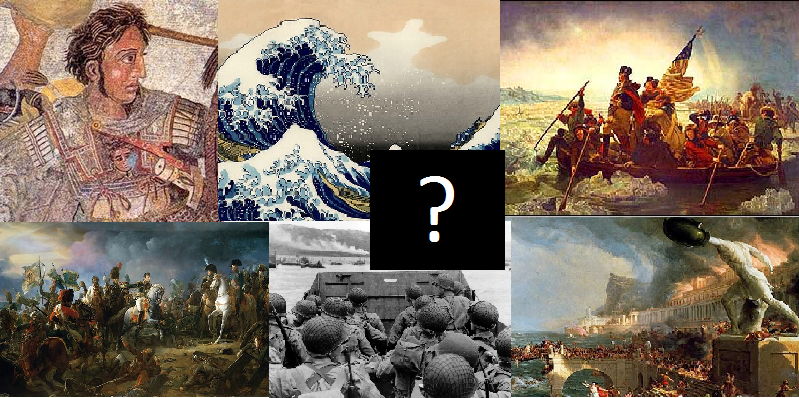 What is the most important event in all of human history? What event could influence all events before, during, and after its occurrence? What event still affects us today and will continue to do so till the end of time? Could it be the extraordinary achievements of Alexander the Great’s march across the world? How about the rise and fall of the Roman Empire? Or maybe the birth of America?
Myths and Facts of the Crusades
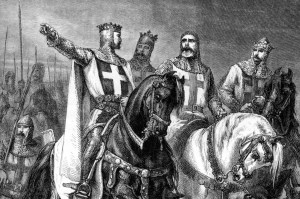
What were the crusades? Today we hear all sorts of ideas of what modern man perceives to be the cause, goal, and purpose of the Crusades. Let’s look at some of these common misconceptions and try to get a better understanding of the people, places, and events in which these trying times took place.

Intro to Heresies
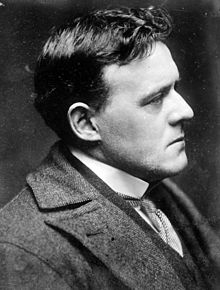
Hilarie Belloc identifies five major heresies in our history: the Arian, the Mohammed, the Albigensian, the Protestant, and the Modern. He defines heresy as “the dislocation of some complete and self-supporting scheme by the introduction of a novel denial of some essential part therein.” The Church is that complete and self-supporting scheme in which this discussion is framed. Each of these heresies, as with all heresies, introduces a denial of some essential part of the Church.
Arianism was the denial of the divinity of Christ. Mohammedism was, and still is an overly simplified version of Christian doctrine and denies our Lord as nothing more than a prophet. Albigensianism tried to rationalize the problem of evil and ended up denying the omnipotent goodness of the Creator. Protestantism destroyed the unity of the bride of Christ and denied her authority. And the Modern heresy is the denial of truth and certainty.
Heresy is a serious problem. We all need to be united as one in our Lord. In the first letter to the Corinthians Paul says, “Now I beseech you, brethren, by the name of our Lord Jesus Christ, that you all speak the same thing, and that there be no schisms among you; but that you be perfect in the same mind, and in the same judgment.” (1 Corinthians 1:10)
Heresy seeks to interrupt the unity of mind and of same judgment. This is the tactic and goal of the enemy; to confuse; to disorder; to lead astray. The enemy uses our human weakness to cause chaos and anarchy leading us away from the truth and ultimately to our own damnation.
This is why our ancestors took heresy so seriously. This is why they fought and died to uphold the truth and the unity of the Church. As our Lord said, “And fear ye not them that kill the body, but are not able to kill the soul: but rather fear him who is able to destroy both soul and body in hell.” (Matthew 10:28) My brothers and sisters in Christ, heresies still affect us to this day, and our bodies and souls are in mortal jeopardy.
Heresy plays on our pride and arrogance. We think that we know better than our superiors, our ancestors, our Church, and ultimately God himself. We put our faith in this world and not the next; in the next technology or material item; in the government or some other man made institution; in the newest philosophies or most modern ways of thinking.
As Catholics we are called to defend the truth and our One Holy Apostolic Church, which Jesus Himself instituted and which has continued to be guided by the Holy Spirit. This means that we are not allowed to dissent on Church teachings. This is why we as Catholics can never support intrinsic evils: abortion, euthanasia, embryonic stem cell research, human cloning, nor same-sex marriage.
Let us unite ourselves under one banner, the King of King, our Lord and Savior, who died for us. Let us serve His Church. Let us be one.
Viva Cristo Rey!
Early Persecutions
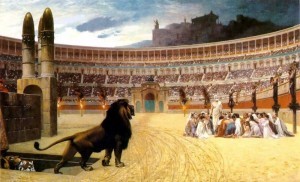
In A.D. 64 more than half of Rome burned to the ground. The Emperor Nero, blaming it on the Christians began the first major persecution of the Church by the State. These persecutions would last, on and off, till 313 A.D. with the Edict of Milan, which finally legalized Christianity.
Three particularly heroic martyrs of the early Church were St. Polycarp, St. Ignatius, and St. Lawrence.

Saint George
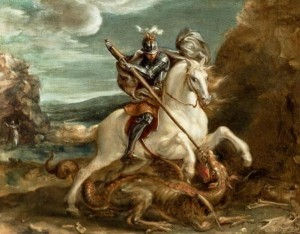 According to legend a terrible dragon had ravaged all the country round the city of Libya, called Selena, making its lair a marshy swamp. Its breath caused pestilence whenever it approached the town, so the people gave the monster two sheep everyday to satisfy its hunger, but, when the sheep failed, a human victim was necessary and lots were drawn to determine the victim.
St. Sir Thomas More
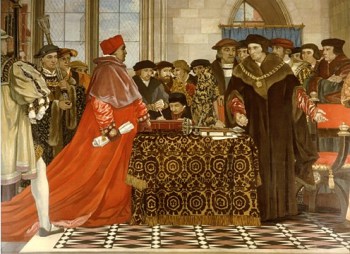
St. Sir Thomas More lived during the reign of King Henry VIII of England and Martin Luther, rebels, whom were major figures of the Protestant Rebellion. More worked tirelessly to halt the spread of Protestantism and was a staunch defender of the Church. In his work A Dialogue Concerning Heresies he asserted that the Catholic Church was the one true Church, whose authority had been established by Christ and the Apostles, and that its traditions and practices were valid.
 The Lord of History